
Wondering, do I need an accountant if I use QuickBooks? Discover the benefits of both and learn when professional help is
Qasim Raza | QuickBooks Expert


Accounting & Bookkeeping
QuickBooks
 By qasimquickbooks416@
August 27, 2026
By qasimquickbooks416@
August 27, 2026
Do I Need an Accountant If I Use QuickBooks?
 By qasimquickbooks416@
August 27, 2026
By qasimquickbooks416@
August 27, 2026
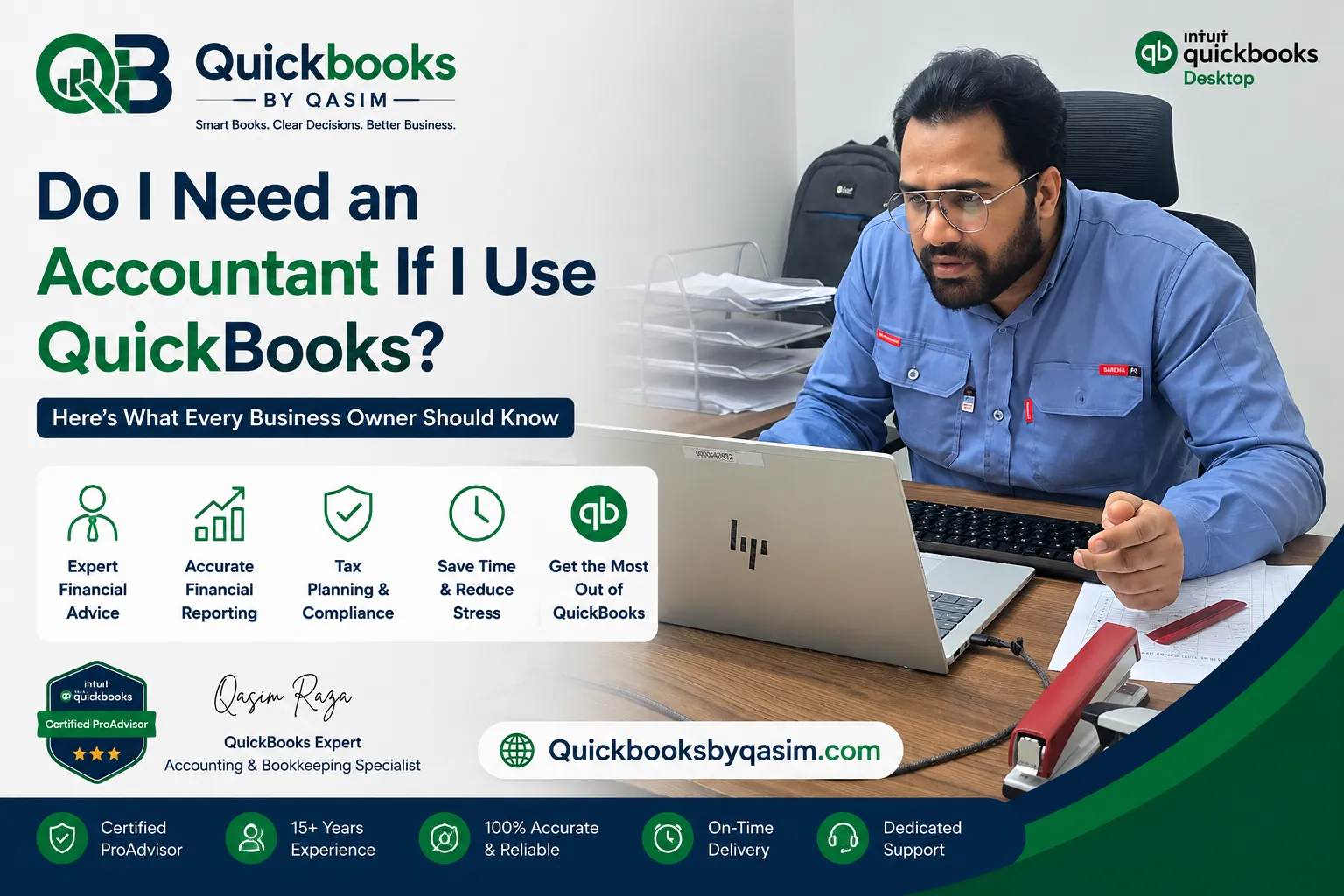
Do I need an accountant if I use QuickBooks? Many business owners ask this question after setting up QuickBooks for their bookkeeping. QuickBooks automates many accounting tasks, including invoicing, expense tracking, and financial reporting. Therefore, some users assume they no longer need an accountant. However, bookkeeping software and professional accounting services serve different purposes. While QuickBooks helps record financial data, an accountant helps interpret that data and ensure financial accuracy. As a QuickBooks Online Expert, I often explain that QuickBooks is a powerful tool, but it cannot completely replace professional accounting expertise in every situation.
Understanding What QuickBooks Does
QuickBooks is accounting software designed to simplify bookkeeping and financial management.
QuickBooks helps users:
- Track income and expenses
- Create invoices
- Manage bills
- Reconcile bank accounts
- Record payments
- Monitor cash flow
- Generate financial reports
Additionally, QuickBooks automates many routine accounting tasks. As a result, business owners spend less time on manual bookkeeping.
However, software only works with the information users enter. Therefore, inaccurate entries can still create reporting problems.
What Does an Accountant Do?
Before answering do I need an accountant if I use QuickBooks, it helps to understand an accountant’s role.
An accountant can:
- Review financial records
- Correct bookkeeping errors
- Prepare tax returns
- Provide tax planning
- Analyze financial statements
- Create budgets
- Offer business advice
- Ensure compliance with regulations
Moreover, accountants help business owners understand financial performance and identify opportunities for improvement.
While QuickBooks records transactions, accountants provide professional guidance.
Can QuickBooks Replace an Accountant?
The simple answer is no.
QuickBooks automates bookkeeping processes. However, it does not replace professional judgment.
For example, QuickBooks can generate a Profit and Loss Report. Yet it cannot explain why profits declined or recommend corrective actions.
Similarly, QuickBooks can record transactions. However, it cannot always determine the correct accounting treatment for complex situations.
Therefore, businesses should view QuickBooks as a tool that supports accountants rather than replaces them.
Businesses That May Not Need a Full-Time Accountant
Some small businesses can handle daily bookkeeping independently.
Examples include:
- Freelancers
- Consultants
- Solopreneurs
- Independent contractors
- Small online sellers
These businesses often have:
- Limited transactions
- Simple tax requirements
- Minimal payroll obligations
- Few financial complexities
In these situations, QuickBooks may handle most daily accounting tasks effectively.
However, periodic accountant reviews still provide value.
Situations Where You Should Hire an Accountant
If you are asking do I need an accountant if I use QuickBooks, the answer often depends on business complexity.
Consider hiring an accountant when:
- Revenue grows rapidly
- Payroll becomes complex
- Tax obligations increase
- Investors require reports
- Multiple locations operate
- Inventory management expands
- Financial statements require review
Additionally, businesses facing audits should seek professional accounting support.
Professional guidance can prevent costly mistakes.
Benefits of Using QuickBooks and an Accountant Together
The strongest financial management systems combine software with professional expertise.
Benefits include:
- Greater accuracy
- Better reporting
- Stronger tax planning
- Improved cash flow management
- Reduced compliance risk
- Faster month-end closing
- Better business decisions
Furthermore, accountants can use QuickBooks reports to provide deeper insights into company performance.
This combination creates a more effective financial management process.
Common Accounting Tasks QuickBooks Handles Well
QuickBooks performs many bookkeeping functions efficiently.
These include:
Expense Tracking
QuickBooks categorizes expenses and creates spending reports.
Invoicing
Users can create and send professional invoices quickly.
Bank Reconciliation
QuickBooks helps match transactions with bank statements.
Basic Financial Reports
The software generates key reports such as:
- Profit and Loss
- Balance Sheet
- Cash Flow Statement
As a result, businesses gain better financial visibility.
Tasks That Still Require an Accountant
Even advanced software cannot fully replace professional expertise.
Accountants often assist with:
Tax Planning
Tax planning can reduce liabilities and improve compliance.
Financial Strategy
Accountants analyze trends and provide recommendations.
Complex Journal Entries
Certain transactions require specialized accounting knowledge.
Business Structure Decisions
Choosing between business entities affects taxes and liability.
Audit Support
Accountants help prepare documentation and respond to audit requests.
Therefore, professional input remains valuable even when using QuickBooks.
Common Mistakes Business Owners Make
Many business owners assume software automatically fixes accounting errors.
Common mistakes include:
- Using incorrect accounts
- Missing deductions
- Misclassifying expenses
- Ignoring reconciliations
- Failing to review reports
- Overlooking tax obligations
These errors can impact financial statements and tax filings.
An accountant can identify and correct these issues before they become expensive problems.
How Often Should an Accountant Review QuickBooks?
The review schedule depends on business size and complexity.
Many businesses benefit from:
- Monthly reviews
- Quarterly reviews
- Year-end reviews
- Tax season reviews
Regular reviews help maintain accurate books and prevent issues from accumulating.
Consequently, companies can make decisions using reliable financial information.
Signs You Need Professional Accounting Help
Several warning signs indicate that professional assistance may be necessary.
These include:
- Unreconciled accounts
- Frequent bookkeeping errors
- Cash flow problems
- Unexplained account balances
- Tax filing concerns
- Rapid business growth
- Complex inventory management
If these issues occur, an accountant can help restore financial accuracy and control.
Cost Comparison: Accountant vs. Doing Everything Yourself
Many owners hesitate because of accounting costs.
However, mistakes often cost more than professional services.
An accountant may help you:
- Identify tax savings
- Avoid penalties
- Improve reporting
- Reduce errors
- Save time
Therefore, accounting services frequently provide a positive return on investment.
For growing businesses, professional guidance often becomes a valuable asset.
How QuickBooks and Accountants Improve Business Decisions
Reliable financial data leads to smarter decisions.
When QuickBooks and accountants work together, businesses can:
- Analyze profitability
- Control expenses
- Improve budgeting
- Forecast revenue
- Manage cash flow
- Evaluate growth opportunities
Furthermore, accurate reporting increases confidence when making strategic business decisions.
Because of this, many successful companies rely on both software and professional expertise.
Conclusion
Do I need an accountant if I use QuickBooks? In many cases, QuickBooks can handle daily bookkeeping tasks, but it cannot fully replace professional accounting advice. Small businesses with simple finances may manage many activities independently. However, growing businesses often benefit from accountant support for tax planning, compliance, financial analysis, and strategic decision-making. The best approach is often combining QuickBooks with periodic accountant reviews. This strategy improves accuracy, saves time, reduces risk, and helps build a stronger financial foundation for long-term business success.
For a complete overview of QuickBooks Online, read our QuickBooks Online Complete Guide 2026