
Learn IAS 1 Financial Statements Presentation in simple words. Understand financial statements, key rules, and reporting
Qasim Raza | QuickBooks Expert


Financial Management
International Financial Reporting Standards
 By qasimquickbooks416@
September 01, 2026
By qasimquickbooks416@
September 01, 2026
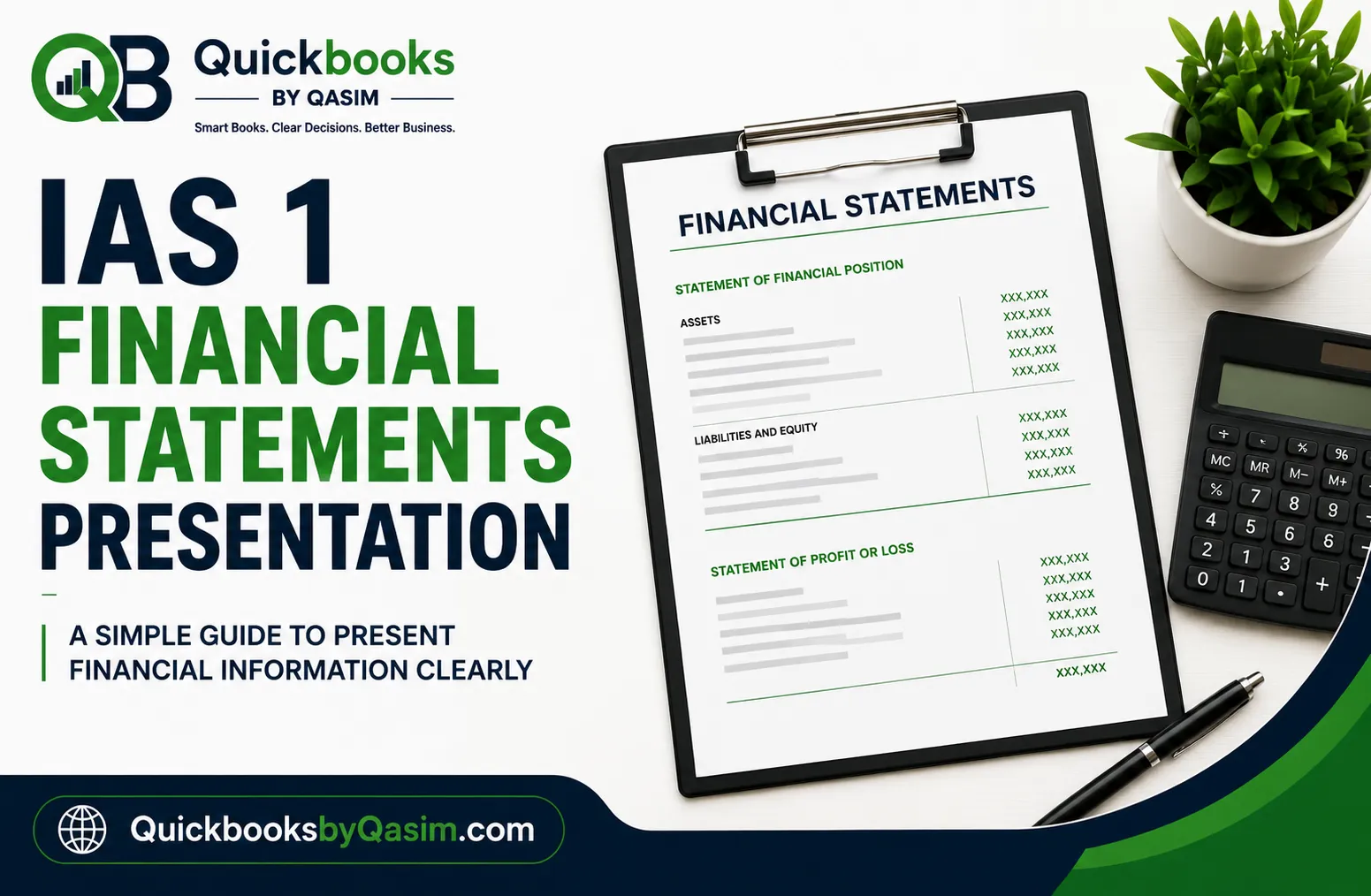
IAS 1 Financial Statements Presentation
 By qasimquickbooks416@
September 01, 2026
By qasimquickbooks416@
September 01, 2026
Do financial statements look confusing to you?
Many beginners struggle to understand financial reports. They often see many numbers but can’t tell what they mean.
The good news is that IAS 1 helps make reports clear. It provides rules for how companies present financial statements.
In this guide, you’ll learn what IAS 1 means, why it matters, key requirements, benefits, common mistakes, and helpful tips. You’ll also see how businesses use IAS 1 to create clear and useful reports.
What Is IAS 1 Financial Statements Presentation?
IAS 1 stands for International Accounting Standard 1.
It gives rules for presenting financial statements.
Companies use IAS 1 when they prepare financial reports under IFRS.
IAS 1 helps businesses present information in a clear and consistent way.
Without clear rules, every company could use a different format.
That would make reports hard to compare.
IAS 1 solves this problem.
It helps investors, lenders, and managers understand financial results more easily.
The main benefit of IAS 1 is consistency.
When companies follow the same rules, readers can compare reports with confidence.
IAS 1 also helps companies:
- Present financial information clearly
- Improve transparency
- Support good business decisions
- Build trust with investors
- Meet IFRS requirements
Many organizations around the world use IAS 1 because it creates reliable financial reports.
Why IAS 1 Matters
Financial statements tell a company’s story.
They show profits, expenses, assets, and debts.
People rely on these reports when making decisions.
Investors want to know if a company performs well.
Banks want to know if a company can repay loans.
Managers need reports to guide business plans.
IAS 1 helps all these groups.
It ensures that information appears in a logical format.
This makes reports easier to read.
It also reduces confusion.
When companies follow IAS 1, users don’t need to learn a different format every time.
That saves time and improves understanding.
Key Financial Statements Under IAS 1
IAS 1 requires several important financial statements.
Each statement serves a specific purpose.
Together, they provide a complete picture of a business.
Statement of Financial Position
People often call this the balance sheet.
It shows:
- Assets
- Liabilities
- Equity
Assets are things the company owns.
Liabilities are amounts the company owes.
Equity shows the owners’ interest in the business.
This statement helps readers understand financial strength.
Statement of Profit or Loss
This statement shows business performance.
It includes:
- Revenue
- Expenses
- Profit
- Loss
Readers can see if the company earned money during the period.
Statement of Changes in Equity
This report tracks changes in equity.
It shows:
- Share capital changes
- Retained earnings changes
- Other equity movements
This helps users understand changes in ownership value.
Statement of Cash Flows
Cash is important for every company.
This report shows:
- Cash received
- Cash paid
- Cash balances
Readers can see how cash moves through the business.
Notes to the Financial Statements
The notes explain important details.
They provide extra information about:
- Accounting policies
- Estimates
- Risks
- Assumptions
The notes help users understand the numbers better.
Fundamental Principles of IAS 1
IAS 1 includes several important principles.
Companies must follow these principles when preparing reports.
Fair Presentation
Financial statements must show the true situation.
Companies should present information honestly.
Users need reports they can trust.
Going Concern
Businesses usually prepare reports as ongoing operations.
This means the company expects to continue trading.
If serious problems exist, management must disclose them.
Consistency
Companies should use the same presentation style each year.
Consistency helps users compare reports.
Frequent changes can create confusion.
Materiality
Important information should appear in financial reports.
Small and unimportant items don’t need special focus.
Material information can affect decisions.
Accrual Basis
Companies record transactions when they occur.
They don’t wait for cash movement.
This gives a clearer picture of business activity.
These principles form the foundation of IAS 1.
Presentation Requirements Under IAS 1
IAS 1 includes specific presentation requirements.
These rules improve clarity and comparability.
Each set of financial statements should clearly show:
- Company name
- Reporting period
- Currency used
- Level of rounding
- Type of financial statement
Companies should also separate current and non-current items.
Current assets may include:
- Cash
- Inventory
- Trade receivables
Non-current assets may include:
- Buildings
- Machinery
- Long-term investments
Current liabilities may include:
- Trade payables
- Short-term loans
Non-current liabilities may include:
- Long-term debt
- Long-term obligations
This structure helps users understand short-term and long-term financial positions.
Disclosure Requirements
IAS 1 requires several disclosures.
These disclosures improve transparency.
Companies should explain accounting policies.
Readers need to understand how the company prepares reports.
Businesses should also disclose:
- Key judgments
- Important estimates
- Major risks
- Sources of uncertainty
These details help users evaluate financial information.
Good disclosure reduces misunderstandings.
It also increases trust.
Importance of Comparability
Comparability is a major goal of IAS 1.
Users often compare companies.
They also compare results from different years.
Without a common format, this task becomes difficult.
IAS 1 creates a consistent structure.
This makes comparisons easier.
Investors can review different companies side by side.
Managers can compare current results with past performance.
As a result, decision-making improves.
Benefits of IAS 1 Financial Statements Presentation
- Creates clear financial reports
- Improves transparency
- Makes reports easier to compare
- Supports better decisions
- Builds investor confidence
- Helps meet IFRS requirements
- Improves financial communication
- Reduces confusion
- Encourages consistency
- Strengthens trust in reporting
How to Apply IAS 1 Financial Statements Presentation
- Identify reporting requirements.
- Prepare the required statements.
- Apply accounting policies consistently.
- Present information clearly.
- Separate current and non-current items.
- Include necessary disclosures.
- Review material information.
- Add supporting notes.
- Check consistency across reports.
- Finalize the financial statements.
Simple Example of IAS 1
Imagine a small company sells office supplies.
The business owns cash, inventory, and equipment.
It also owes money to suppliers.
Using IAS 1, the company prepares:
- A statement of financial position
- A profit or loss statement
- A cash flow statement
- A statement of changes in equity
- Supporting notes
Each report follows a clear structure.
Investors can quickly understand the company’s position.
Banks can review financial strength.
Managers can track performance.
This shows how IAS 1 supports reporting quality.
Challenges Businesses Face
Some companies face challenges when applying IAS 1.
New businesses may lack reporting experience.
Accounting teams may misunderstand disclosure rules.
Some organizations also struggle with materiality decisions.
They may include too much information.
Or they may leave out important details.
Regular training can help solve these issues.
Clear documentation also improves reporting quality.
Over time, IAS 1 becomes easier to apply.
Common Mistakes
- Missing required disclosures
- Using inconsistent formats
- Poor classification of assets
- Poor classification of liabilities
- Ignoring material information
- Weak supporting notes
- Changing policies without explanation
- Missing comparative figures
- Unclear financial statement titles
- Incomplete reporting periods
Helpful Tips
- Follow IAS 1 requirements carefully
- Keep reports easy to read
- Review disclosures regularly
- Use consistent formats every year
- Focus on material information
- Add clear explanatory notes
- Train accounting staff often
- Check classifications carefully
- Compare reports before publishing
- Maintain strong documentation
Frequently Asked Questions
1. What is IAS 1?
IAS 1 is an IFRS accounting standard. It provides rules for presenting financial statements clearly and consistently.
2. Why is IAS 1 important?
IAS 1 improves transparency and comparability. It helps users understand financial information more easily.
3. What financial statements does IAS 1 require?
IAS 1 requires a statement of financial position, profit or loss statement, cash flow statement, equity statement, and notes.
4. Who uses IAS 1?
Companies that follow IFRS use IAS 1 when preparing financial statements.
5. What is the main goal of IAS 1?
The main goal is clear and fair presentation of financial information for users and stakeholders.
Conclusion
IAS 1 Financial Statements Presentation plays a key role in financial reporting.
It provides rules that help companies present information clearly and consistently. It also improves transparency, comparability, and trust.
By understanding IAS 1, businesses can create better financial reports and meet IFRS requirements with confidence.
Start reviewing your financial statements today. A clear report helps everyone make better decisions, and that’s a great step toward business success.
Learn more about the IFRS framework in our What is IFRS? guide.